

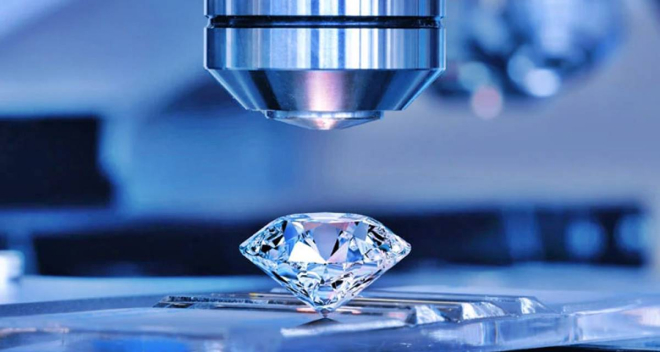


Why Lab-grown Diamonds Are Better
Than Moissanite

Elegance Refined: Why Lab-Grown Diamonds Outshine
Moissanite.
In a time where sustainability and ethical sourcing are crucial, lab-grown diamonds and moissanite have emerged
as revolutionary alternatives to traditional gemstones. With an increasing importance given to responsible
consumerism, these synthetic gems offer a compelling solution that blends elegance, durability, and
environmental consciousness. In this article, we delve into the world of lab-grown diamonds and moissanite,
shedding light on their remarkable characteristics and exploring why they have gained substantial traction in the
luxury jewelry market.
UNDERSTANDING LAB-GROWN DIAMONDS
Lab-grown diamonds, also known as cultured or synthetic diamonds, are diamonds created through advanced
technological processes in laboratory settings. Unlike natural diamonds, which are formed deep within the Earth's
mantle over millions of years, lab-grown diamonds are produced within a matter of weeks. This revolutionary
process involves recreating the intense heat and pressure conditions found in nature, allowing carbon atoms to
crystallize and form diamonds.
In terms of chemical composition and physical properties, lab-grown diamonds mirror their natural counterparts to
an astonishing degree. Both natural and lab-grown diamonds are composed of carbon atoms arranged in a
crystal lattice structure. This shared chemical makeup contributes to their extraordinary brilliance, durability, and
ability to refract light with unparalleled beauty. Additionally, lab-grown diamonds possess the same hardness (10
on the Mohs scale) as natural diamonds, making them equally resistant to scratches and ideal for everyday wear.

However, the availability and environmental impact of these diamond
types differ significantly. Natural diamond mining requires extensive resources, including land excavation and energy consumption, resulting in environmental
disturbances. In contrast, lab-grown diamonds have a significantly lower carbon footprint, making them a more
sustainable choice.
WHAT IS MOISSANITE?
While considering diamond alternatives, moissanite has always been a top contender. Discovered by Nobel Prize-
winning chemist Dr. Henri Moissan in 1893, moissanite is a gemstone that displays brilliance and elegance. While
examining samples from a meteorite crater in Arizona, Moissan identified a sparkling mineral that he initially
mistook for diamonds. This mineral was later named "moissanite" in his honor. Although naturally occurring
moissanite is incredibly rare, scientists have successfully synthesized it in laboratories, making it more accessible
to jewelry enthusiasts.

Moissanite, scientifically known as silicon carbide (SiC), exhibits a unique crystal structure that contributes to its
exceptional optical properties. While diamonds are formed solely of carbon, moissanite combines silicon and
carbon atoms. In terms of physical properties, moissanite is known for its remarkable hardness, but scores lower on
the Mohs scale as compared to both lab-grown and natural diamonds.
LAB-GROWN DIAMONDS VS. MOISSANITE

VISUALS
When it comes to optical properties, lab-grown diamonds outshine moissanite in their ability
to capture and reflect light. These lab-grown marvels have a brilliance and sparkle that closely rival the natural diamonds formed deep
within the Earth's embrace. Their exceptional beauty comes to life through a symphony of refractive index and light
dispersion properties, resulting in a breathtaking display of radiant white light.
While moissanite has its own distinctive appeal, it falls short of matching the brilliance and fire found in lab-grown
diamonds. Moissanite's captivating play of colorful spectral flashes, is undoubtedly striking, but it lacks the same
level of depth and brilliance that defines lab-grown diamonds. For those who seek a gemstone that will command
attention and create an aura of undeniable beauty, lab-grown diamonds are the true champions of brilliance.
HARDNESS AND DURABILITY
Once again, lab-grown diamonds take the lead. They share the same level of hardness as natural diamonds,
scoring a perfect 10 on the Mohs scale. This exceptional hardness ensures that labgrown diamonds are highly
resistant to scratches, making them suitable for everyday wear.
On the other hand, while moissanite is a relatively hard gemstone with a score of 9.25 on the Mohs scale, it falls
slightly behind lab-grown diamonds in terms of durability. Moissanite has a higher likelihood of chipping or
scratching over time, which can diminish its overall beauty and longevity.
Lab-grown diamonds are more than just a pretty gemstone, they are symbols of endurance. Their remarkable
durability serves as a testament to their quality and craftsmanship, allowing wearers to cherish their beauty for a
lifetime and beyond. When looking for a gemstone that combines beauty, longevity, and the ability to withstand the
tests of time, lab-grown diamonds emerge as the clear choice, ensuring that your cherished jewel remains as
dazzling as the day you first laid eyes upon it.
COLOR AND CLARITY
Lab-grown diamonds take color and clarity options to a whole new level. You can explore a vast spectrum of
colors, including the highly sought-after white diamonds that deliver on the promise of timeless elegance. But the
excitement doesn't stop there—lab-grown diamonds also offer an array of fancy colored options, allowing you to
make a bold statement with a stunning yellow, pink, or even a rare blue diamond. The color possibilities are virtually
endless, giving you the freedom to select a diamond that perfectly complements your style and personality.
When it comes to clarity, lab-grown diamonds often shine bright with exceptional purity. Their controlled growth
process allows for minimal inclusions or imperfections, resulting in stones that exhibit remarkable clarity. This
pristine appearance enhances the diamond's brilliance and beauty, allowing every facet to reflect light with
utmost clarity and precision.